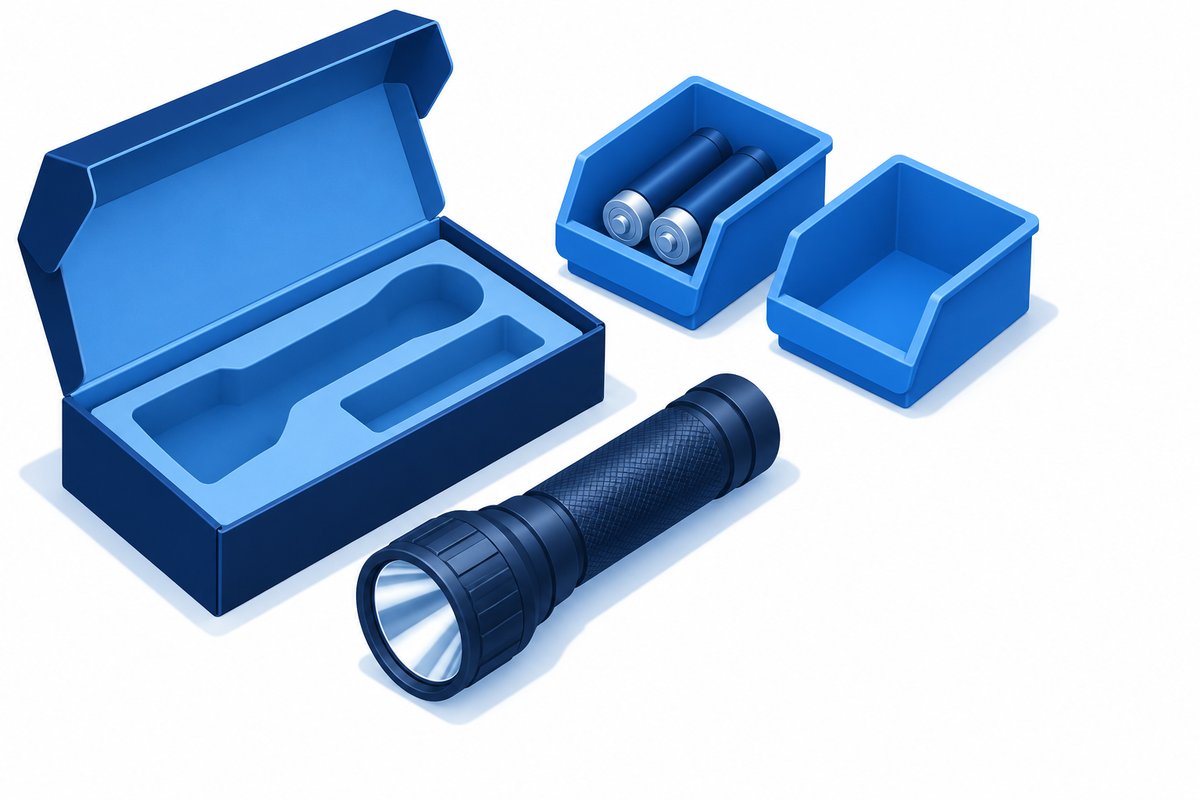

Start at the packing bench
A shop sells a torch and batteries under one order code. The buyer sees one line while the picker needs both items. When parts remain separate until packing, counting empty boxes or torch bodies can overstate what can ship. In Odoo 17 a Kit bill of materials yields one quotation and sales-order line, while its components appear on the delivery order. Verify the behaviour in the installed version.
Identify the limiting part
Assume one kit needs one torch and two batteries. The shipping warehouse has seven pickable torches and nine pickable batteries today. Four complete kits can ship, leaving three torches and one battery after issue. An order for five is one battery short despite the spare torches. These starting quantities are assumed to exclude stock already reserved for others.
Prepacked stock changes the transaction
If the warehouse assembles sealed boxes for stock before sale, define when components leave inventory and finished kits enter it. Trace shipment of an assembled box to that finished stock. Issuing batteries at assembly and exploding the same box into component issues again at dispatch deducts batteries twice. Separate the codes or workflows when both fulfilment methods coexist.
Follow one order through both teams
In a test system order one kit and one extra battery. The expected pick total is one torch and three batteries. Compare the pick with posted movements after dispatch and confirm the customer still sees the agreed order lines. If counts differ, inspect the formula version, unit and quantity per kit before adjusting stock. If only some kits can ship, agree a date for the remainder before closing the order.