
A product code identifies the model, not necessarily the unit
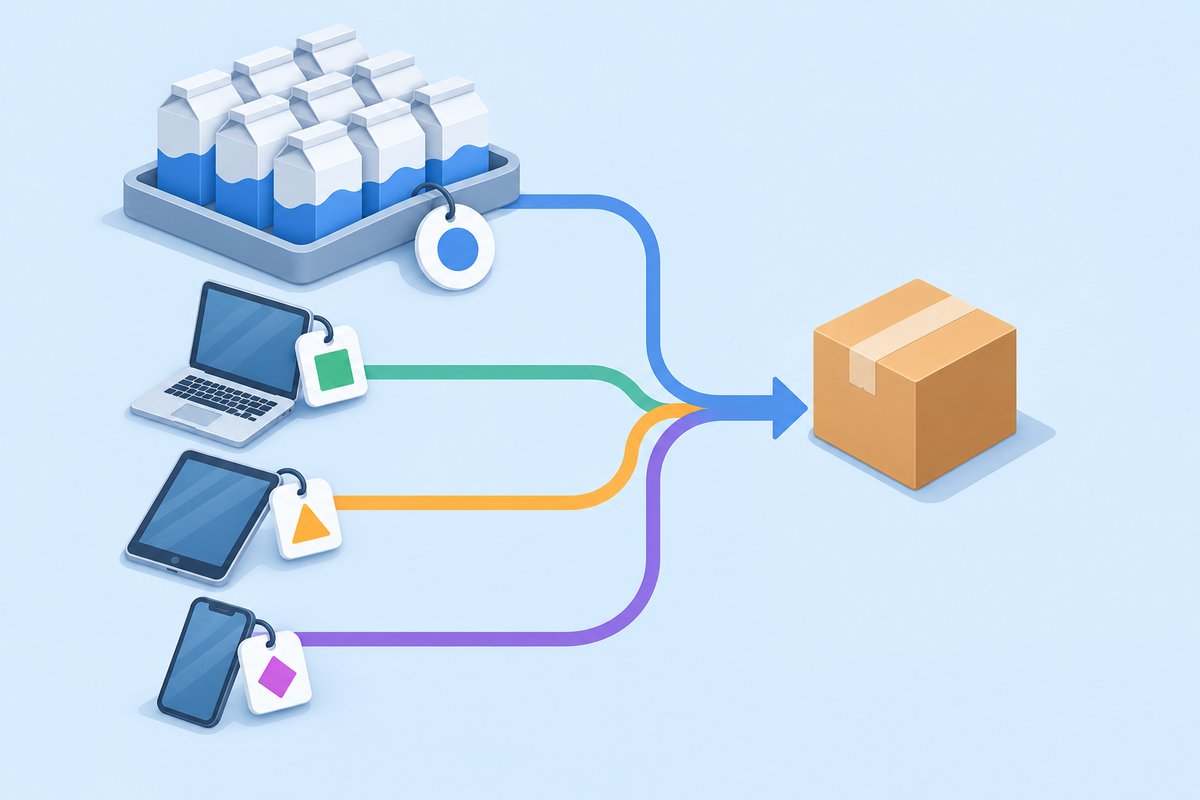
A customer returns the same model you sell, but the team cannot tell whether it is the unit previously delivered. A product code and stock total are insufficient for that question. Use a serial number for individual-unit history and a lot for a group sharing a receipt or production context. Choose according to the questions raised by returns or investigations, not simply because a field exists.
Odoo documentation distinguishes lots grouping items with common characteristics from serial numbers identifying individual units. Traceability reports connect origin, storage and destination. This illustrates an ERP concept, not a claim that every system has identical menus or rules, or that enabling tracking reconstructs missing history.
Define where identifiers come from and who verifies them
Collect actual label samples before configuration. Separate model SKU, manufacturer serial, lot and internal reference. If an internal identifier is needed, retain its mapping to the original instead of overwriting it. Define character and leading-zero rules and an unreadable-label procedure. Staff should not invent a new number merely to pass validation and mix up unit histories.
Define checks at receipt, relocation, dispatch and return. Receiving staff should reconcile physical units with recorded identifiers; dispatch staff should match identifiers to the packed goods. Printing or scanning a label proves readability, not correct association. Test dispatch of an unreceived identifier and duplicate use of one identifier against the agreed rules.
Hypothetical example: two returns of the same model
Suppose two units are delivered to different customers and one comes back. A shared lot may identify the receipt batch without distinguishing the two histories. A serial checked against the physical unit at receipt and dispatch can locate linked documents. A matching serial is not itself a warranty decision: purchase terms, condition and other evidence still require separate review.
Pilot matching, mismatching and unreadable return identifiers, using a review-hold status to keep them separate from saleable stock. Record decisions and data corrections. When replacing a unit, link old and new identifiers with the replacement document rather than overwriting history so the original event disappears.
Identify gaps in existing history before rollout
Count existing stock and match identifiers to physical items before importing. Preserve the start date and unresolved items; do not fabricate old receipts to make history appear complete. Test a delivery back to its receipt and a receipt forward to remaining and dispatched stock. Resolve process or permission gaps before expanding the rollout.
When discussing company systems and ERP with Chawinnix, bring label samples, receipt–delivery–return flows and unanswered operational questions. Choose traceability that justifies its recording effort; do not require serial tracking for every product if validated lot tracking fully meets the need.